

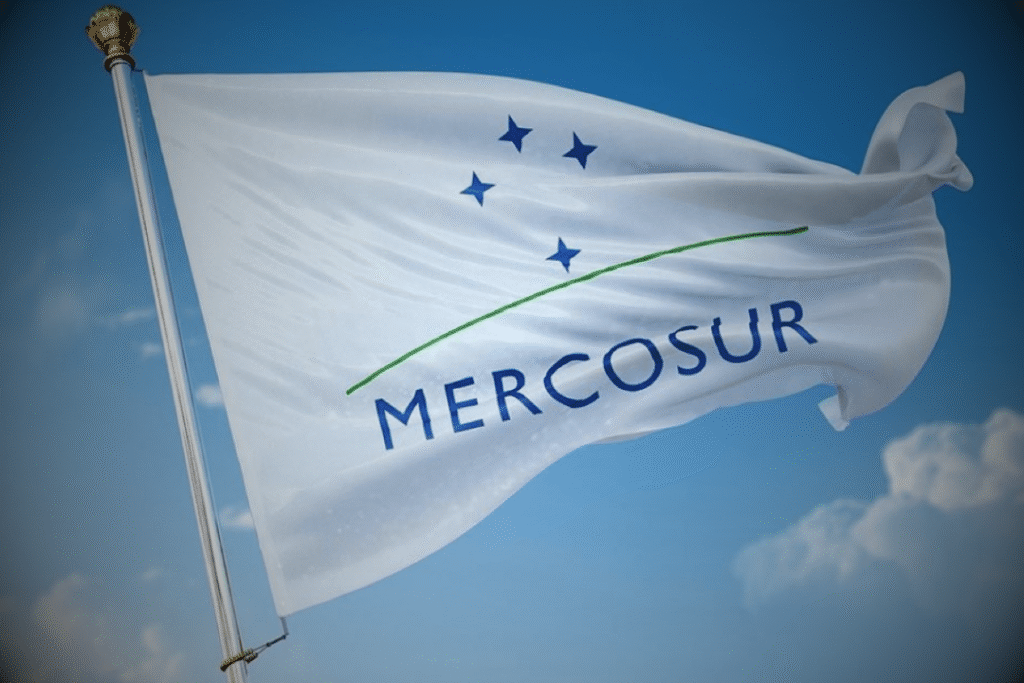
Borders that Transform: A New Migratory Paradigm
Have you ever imagined moving to another country without facing the usual bureaucratic barriers? Just a few decades ago, moving from one country to another in South America was a process as complicated as trying to assemble a puzzle with pieces from different games. Today, thanks to the Mercosur Residence Agreement, this reality has changed dramatically.
I’ll tell you something interesting: before the Mercosur Agreement, a Brazilian citizen who wanted to legally establish themselves in Uruguay could wait up to 3 years to obtain permanent residency. Today, that same process can be completed in less than 24 months with significantly simpler requirements.
The Mercosur Agreement: More than a Trade Treaty
When most people hear “Mercosur,” they immediately think of tariffs and trade agreements. However, this regional bloc has gone much further, transforming itself into a true engine of human integration.
The Residence Agreement: The Crown Jewel
In 2002, member countries signed the “Agreement on Residence for Nationals of Mercosur Member States,” which finally entered into force in 2009. This agreement is like a regional passport that allows citizens of:
- Argentina
- Brazil
- Paraguay
- Uruguay
- Bolivia
- Chile
- Colombia
- Ecuador
- Peru
To apply for legal residency in any of these countries with simplified requirements.
Revealing fact: Since the implementation of the Agreement, intra-regional migratory flows have increased by more than 30%, with approximately 5.8 million people residing in a Mercosur country different from their birth country.
Uruguay: The Little Switzerland of America and Its Migratory Reality
Uruguay, with its population of just 3.5 million inhabitants, has experienced a notable transformation in its migratory patterns thanks to the Mercosur Agreement.
From Emigration Country to Attractive Destination
Historically, Uruguay was a country of emigration, with thousands of Uruguayans leaving for destinations like Spain, the United States, or Argentina. However, the country’s political, economic, and social stability, combined with Mercosur’s migratory facilities, has reversed this trend.
Significant fact: Between 2010 and 2023, Uruguay went from having a negative migratory balance to a positive one, receiving approximately 25,000 new Mercosur residents annually, with Argentinians, Brazilians, and Venezuelans leading the statistics.
The Impact in Numbers: A Tangible Transformation
| Nationality | Pre-Agreement Residencies (2008) | Post-Agreement Residencies (2023) | Growth |
| Argentina | 1,200 annually | 8,500 annually | 608% |
| Brazil | 800 annually | 4,200 annually | 425% |
| Venezuela | 300 annually | 6,800 annually | 2167% |
| Colombia | 150 annually | 3,200 annually | 2033% |
The Migratory Process: Before and After the Agreement
The Mercosur Agreement has drastically simplified the migratory process in Uruguay. It’s like going from needing a complicated master key to having a quick access card.
Before the Agreement: A Path Full of Obstacles
Previously, foreigners who wanted to reside in Uruguay faced:
- Strict economic requirements (demonstrating high income)
- Extensive bureaucratic processes (up to 36 months)
- Need for labor sponsorship
- Excessive and costly documentation
After the Agreement: A More Accessible Horizon
Today, Mercosur citizens simply need:
- Valid passport or identity document
- Criminal background certificate
- Sworn statement of lacking international records
- Medical certificate (in some cases)
- Demonstrate basic means of living
Real experience: A Brazilian teacher who tried to obtain residency in Uruguay in 2005 gave up after a year of procedures and impossible economic requirements to meet. When she tried again in 2018, under the Mercosur Agreement, she obtained her temporary residency in just 4 months and with an approximate cost of 250 USD in total.
Social and Economic Impact: Beyond the Numbers
The Mercosur Agreement has had profound effects on Uruguay’s social and economic fabric.
Profile of the New Mercosur Migrant in Uruguay
You know when a country changes its demographic composition? That’s happening in Uruguay. The profile of the regional migrant has evolved significantly:
- Higher educational level (42% with higher education)
- Younger than the Uruguayan population (average age of 32 years vs. 36 years)
- Greater participation in the formal labor market
- Concentration in sectors such as technology, services, and education
Expert advice: “Uruguay is experiencing unprecedented ‘skilled migration.’ Companies looking to expand regionally are finding in Uruguay an ideal base, combining local talent with Mercosur professionals who can move easily thanks to the Agreement,” explains a migration specialist from the University of the Republic.
Impact on Specific Sectors
- Technology: The arrival of tech sector professionals from Argentina and Brazil has boosted the Uruguayan startup ecosystem
- Services: The gastronomic and hotel sector has diversified with migrant ventures
- Education: Exchange of professionals and more agile degree recognition
- Health: Doctors and nurses from the region strengthen the Uruguayan health system
Practical Life as a Mercosur Migrant in Uruguay
One thing is the theory of the Agreement, and quite another is the real experience of establishing yourself in Uruguay as a Mercosur citizen.
Tangible Advantages and Practical Benefits
- Immediate access to the labor market: You can work legally from the moment you start your process
- Universal health system: Access to the National Integrated Health System
- Free education: From elementary to university
- Gradual political rights: Possibility to vote in municipal elections after 5 years
Watch out for this! Unlike other Mercosur countries, in Uruguay it’s essential to obtain the provisional identity card as soon as you start your residency process. This document is crucial for practically any procedure, from opening a bank account to registering in the health system.
Main Challenges and How to Overcome Them
Although the path is clearer, it’s not without obstacles:
- Bureaucracy still present: Procedures can take between 4-8 months
- High cost of living: Uruguay has one of the highest costs of living in the region
- Small labor market: More competitive than in larger Mercosur countries
- Degree recognition: Although simplified, requires additional procedures
Winning strategy: Start your residency management online through the National Immigration Directorate’s scheduling system. Although appointments tend to fill up quickly, advance planning can save you months of waiting. You can even start certain procedures from your country of origin through the Uruguayan consulate.
Experiences by Nationality: Each Country, A Different Story
The impact of the Agreement varies significantly depending on the country of origin.
Argentinians in Uruguay: The “Cousins” from the River
Argentinians represent the largest group of Mercosur migrants in Uruguay, with generally positive experiences due to:
- Cultural and linguistic similarities
- Geographic proximity
- Robust support networks
- Shared history
Brazilians in Uruguay: Discovering the Southern Neighbor
Brazilians face more adaptation challenges, mainly due to:
- Language barrier (although minor)
- Differences in pace of life
- Distinct work culture
- Colder climate
Practical advice: For Brazilians, it’s advisable to take a basic Spanish course before moving. Although many Uruguayans understand “Portuñol,” mastering Spanish will greatly speed up your integration and job possibilities.
Venezuelans and Colombians: The New Actors
Although Venezuela is not a full member of Mercosur, Venezuelans and Colombians have found in Uruguay an attractive destination, taking advantage of:
- Political stability and security
- Quality educational system
- Access to health services
- Simplified migratory routes
Support Resources and Community: Networks that Sustain
Migration is always a challenge, but there are numerous resources to facilitate the process.
Official Agencies
- National Immigration Directorate: Residency procedures
- Ministry of Foreign Affairs: Information and international coordination
- National Civil Identification Directorate: Identity card
- Ministry of Labor: Job guidance for migrants
Communities and Informal Networks
- Resident associations by nationality
- Social media groups (especially active for Argentinians and Brazilians)
- NGOs specialized in migrant support
- University integration programs
Invaluable resource: The “Guide for Migrants” published by Uruguay’s Ministry of Social Development offers detailed information on rights, obligations, and procedures. You can download it for free and it’s available in Spanish, Portuguese, and English.
Alternatives and Parallel Migratory Routes: Plan B and Beyond
The Mercosur Agreement is the most accessible route for many, but it’s not the only option.
Other Migratory Routes in Uruguay
- Residency by relationship with Uruguayan: Direct access to permanent residency
- Residency by work: Requires employment contract with Uruguayan company
- Residency by investment: For those establishing significant businesses
- Residency by retirement: With proof of monthly income
Strategic note: If you have Uruguayan ancestors, exploring the citizenship by descent route may be more advantageous than Mercosur residency. Uruguay recognizes the right to nationality by blood without generational limit in direct line.
Frequently Asked Questions: What Every Migrant Wants to Know
How has the Mercosur Agreement specifically affected Uruguay compared to other bloc countries?
Uruguay has experienced a proportionally greater impact due to its size. With a small population of 3.5 million, the arrival of approximately 25,000 new Mercosur residents annually represents significant demographic growth. Additionally, Uruguay has been more efficient than its neighbors in implementing the Agreement, with fewer bureaucratic obstacles and greater accessibility to public services for new residents.
Can I use my professional degree obtained in another Mercosur country to practice in Uruguay?
Yes, but it requires an additional process. The Mercosur Agreement facilitates legal residency, but professional practice is regulated by the “ARCU-SUR System” and specific degree recognition agreements. For regulated professions (medicine, engineering, law, etc.), you must complete a revalidation process with the University of the Republic or the Ministry of Education. This process is more agile for degrees from accredited universities within Mercosur, taking between 3-12 months depending on the profession.
How has Uruguayan perception toward Mercosur migrants evolved?
Uruguay has a historical tradition of openness toward immigration, being a country formed by migrants. However, the significant increase in Mercosur residents in the last decade has generated mixed reactions. A 2022 study showed that 68% of Uruguayans view regional immigration positively, considering it a cultural and economic contribution. Nevertheless, there are challenges in specific sectors, particularly in housing access in Montevideo and coastal areas, where increased demand has pressured prices.
Does the Mercosur Agreement give me automatic access to other bloc countries once I obtain residency in Uruguay?
No, the Agreement doesn’t function like the European Schengen space. Obtaining residency in Uruguay allows you to live and work legally in Uruguayan territory, but doesn’t automatically grant you similar rights in other Mercosur countries. However, being a legal resident in Uruguay can facilitate future procedures if you decide to move to another bloc country, as you demonstrate a positive migratory history in the region. Each country change requires starting a new residency process.
An Integrated Future: Beyond Traditional Borders
The Mercosur Residence Agreement has rewritten the rules of the migratory game in the region, and particularly in Uruguay. What was once a bureaucratic labyrinth is today a path still with curves, but much more navigable.
As a Mercosur citizen, you now have the possibility to build a new life in Uruguay with rights almost equivalent to nationals. The small and stable country, with its unique mix of security, human development, and quality of life, continues to open its doors to those seeking a new horizon.
And remember, as an old Uruguayan proverb adapted to these times says: “There are no borders that mate and willpower cannot cross.” Regional integration is not just a political concept; it’s a living reality that transforms the lives of thousands of people each year.
If you’re considering making Uruguay your new home, the Mercosur Agreement has cleared much of the path. The rest depends on your determination, adaptability, and ability to build bridges in this new stage of your life.
- October 8th, 2025
